In 2025, vision turned into real, lived impact. We saw what’s possible when we insist on a future where disability-forward housing exists in every community.
And this work happens in community. Some have been with us since the earliest days, when we were imagining our first community, The Kelsey Ayer Station. Others joined as we developed The Kelsey Civic Center on underutilized land in San Francisco, or as we began shaping what disability-forward housing could look like in the South through The Kelsey Avondale. Others came to this work as policymakers, advocates, and partners working to make housing more accessible, affordable, and inclusive at scale. And some joined us as residents, making these communities home.
As you read on for our top 12 moments of 2025, know that none of this would be possible without your belief, partnership, and support. Wishing you a joyful holiday season and a hopeful new year.
In community,
The Kelsey Team
The Kelsey Civic Center Opening
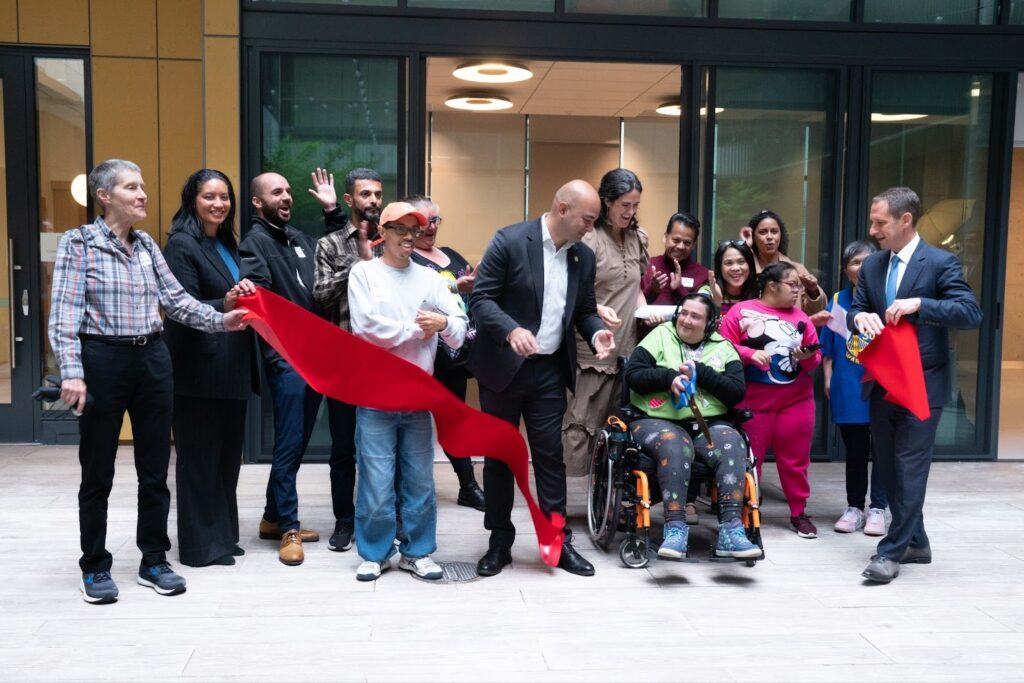
Image description: A diverse group of people gathers for a ribbon-cutting ceremony in front of The Kelsey Civic Center’s courtyard entrance. A person in a wheelchair holds scissors after cutting a bright red ribbon while others cheer and smile around them. The group includes people of different ages with and without disabilities, wearing casual and professional attire.
We celebrated the opening of The Kelsey Civic Center in San Francisco alongside residents, partners, and city leaders. From a joyful ribbon-cutting ceremony to powerful remarks from residents, co-developer Mercy Housing, and partners—including Mayor Daniel Lurie and Supervisor Bilal Mahmood—the celebration reflected the diverse group of supporters that made this community possible. We’re grateful to everyone who played a part in bringing The Kelsey Civic Center to life, and the community that now calls it home.
Click here to read a full recap of the day.
Disability-Forward Housing Featured in National News
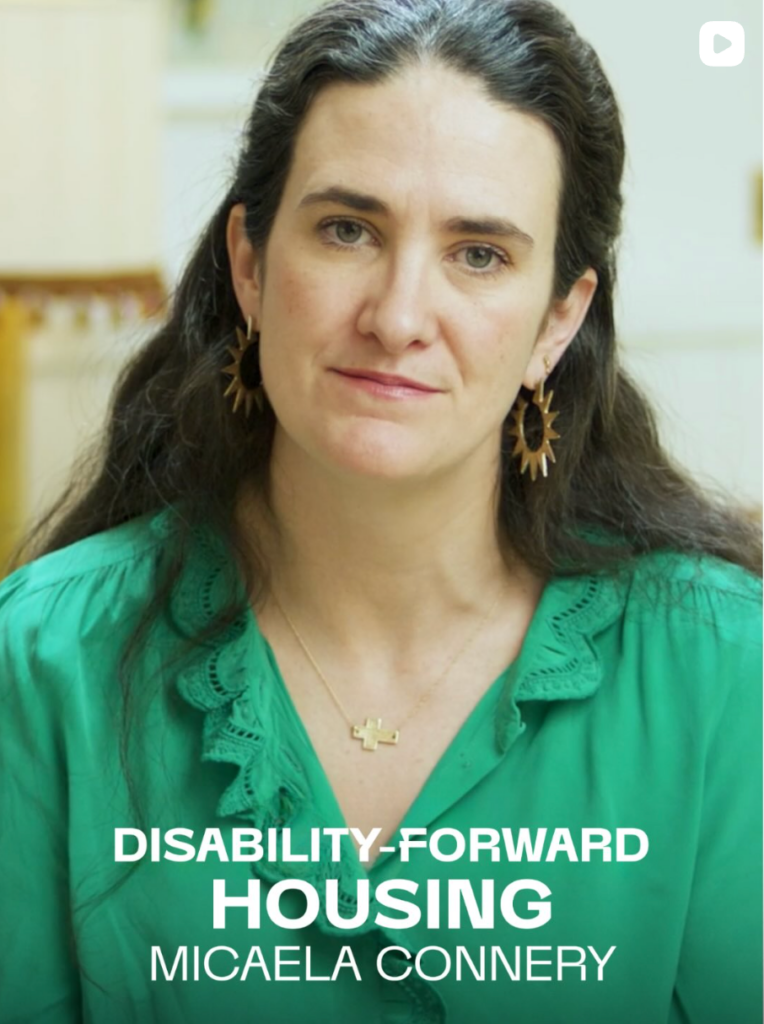
Image description: A still image from Micaela Connery’s Brief But Spectacular segment. Micaela looks at the camera with a slight smile. She is a white woman with long, brown hair, green eyes, wearing a green blouse and gold jewelry, including a cross necklace and sun-shaped earrings. The text “Disability-Forward Housing: Micaela Connery,” is in the lower third of the image.
We reached a national audience through major media features highlighting disability-forward housing and our Bay Area communities. In a PBS NewsHour Brief But Spectacular segment, our co-founder, Micaela, shares how she and our co-founder, Kelsey, turned their lived experience into the founding of The Kelsey. New York Amsterdam News also published an in-depth feature on the housing crisis facing people with disabilities, spotlighting our approach as part of a broader series exploring the urgent need for accessible housing nationwide.
Click here to watch our feature on Brief But Spectacular. Click here to read our feature in New York Amsterdam News.
Resident Stories & Narrative Change Cohort Stories
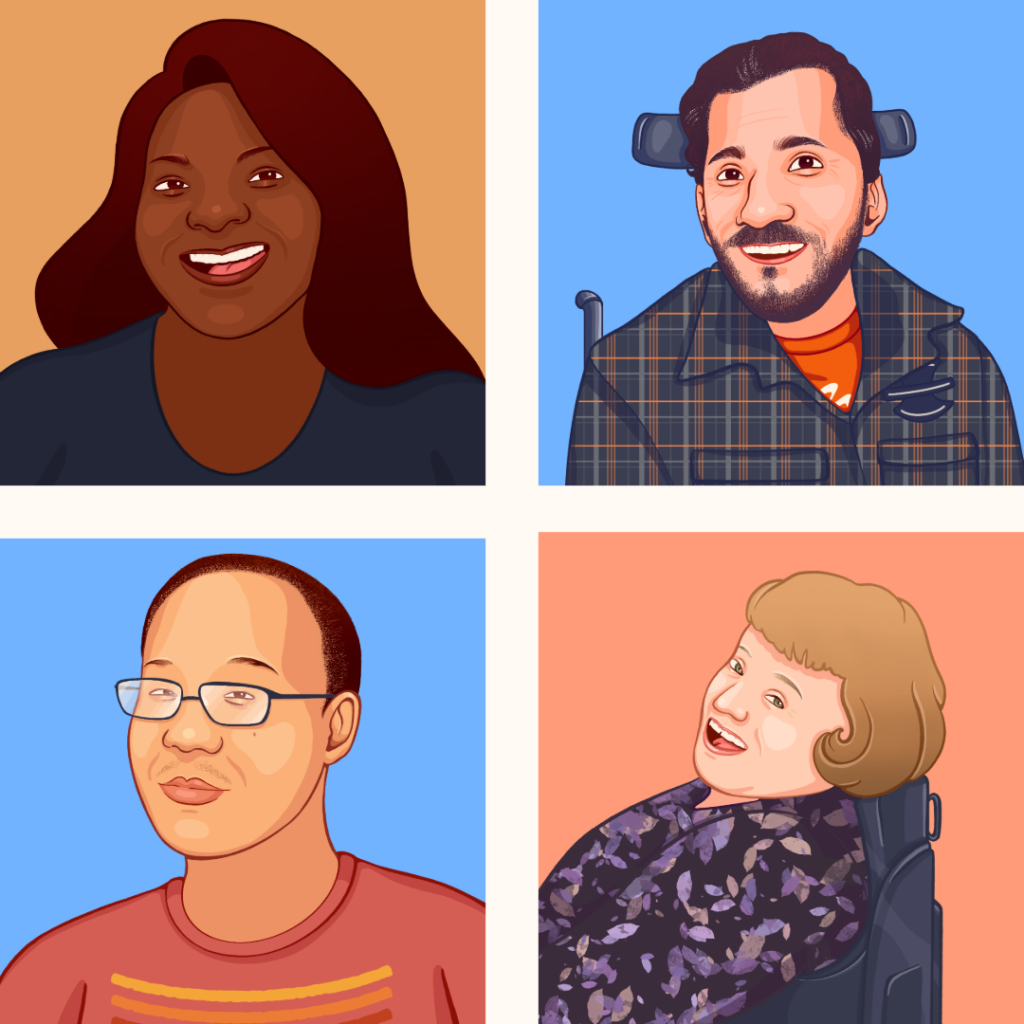
Image description: Four illustrated portraits of The Kelsey residents. From left to right, Jonta, a Black woman with long brown hair, is smiling and wearing a black t-shirt. Jake, a white man with brown hair pulled into a ponytail, wears a plaid shirt and sits in his wheelchair, smiling. Barry, a man with short black hair and glasses, is softly smiling and wearing a red t-shirt. Darcy, a white woman with short blonde hair, is wearing a purple patterned shirt and sitting in her wheelchair, smiling.
Across our communities in San Jose and San Francisco—home to 300 residents with and without disabilities—residents’ stories and lived experiences illustrate both the urgent need for disability-forward housing and its transformative impact. They share the everyday moments that build real connection, from spending time together in the lobby to participating in community activities, as well as the disability-forward design that makes The Kelsey Ayer Station and The Kelsey Civic Center more than places to live, but communities to thrive in.We worked alongside residents to publish these stories, centering their voices and experiences to show what disability-forward housing looks like in practice. Click here to explore these stories.
National Leadership and Federal Advocacy
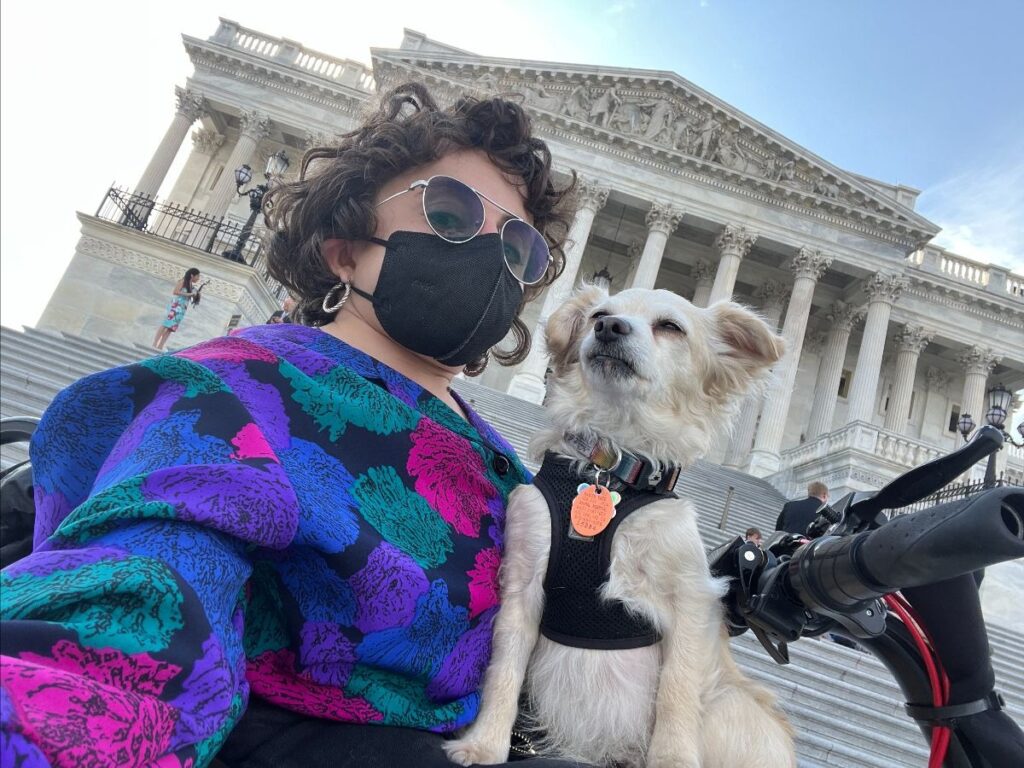
Image description: Allie, our Managing Director, takes a selfie in front of Congress. They are a white queer person in a scooter, wearing sunglasses and holding a dog on their lap. They are wearing a black mask and a purple, blue, and pink sweater.
Building a disability-forward housing future alongside national partners was a defining part of our year. Our federal advocacy continued in close partnership with the Consortium of Constituents with Disabilities Housing Task Force, where Allie, our Managing Director, serves in a leadership role. Allie also represents disability-forward housing on the National Low Income Housing Coalition’s board, elevating these priorities at the national level.
Throughout the year, we traveled to Washington, D.C. to advance inclusive housing policy –– rallying to defend Medicaid, attending HUD budget hearings, advocating to protect federal housing assistance, and meeting with key policymakers to advance both immediate and long-term disability-forward housing solutions. We supported 40 policies this year, and though the systems we aim to change are complex, we’re committed to ensuring that disability-forward housing is included in national housing policy.
Growing Our Team
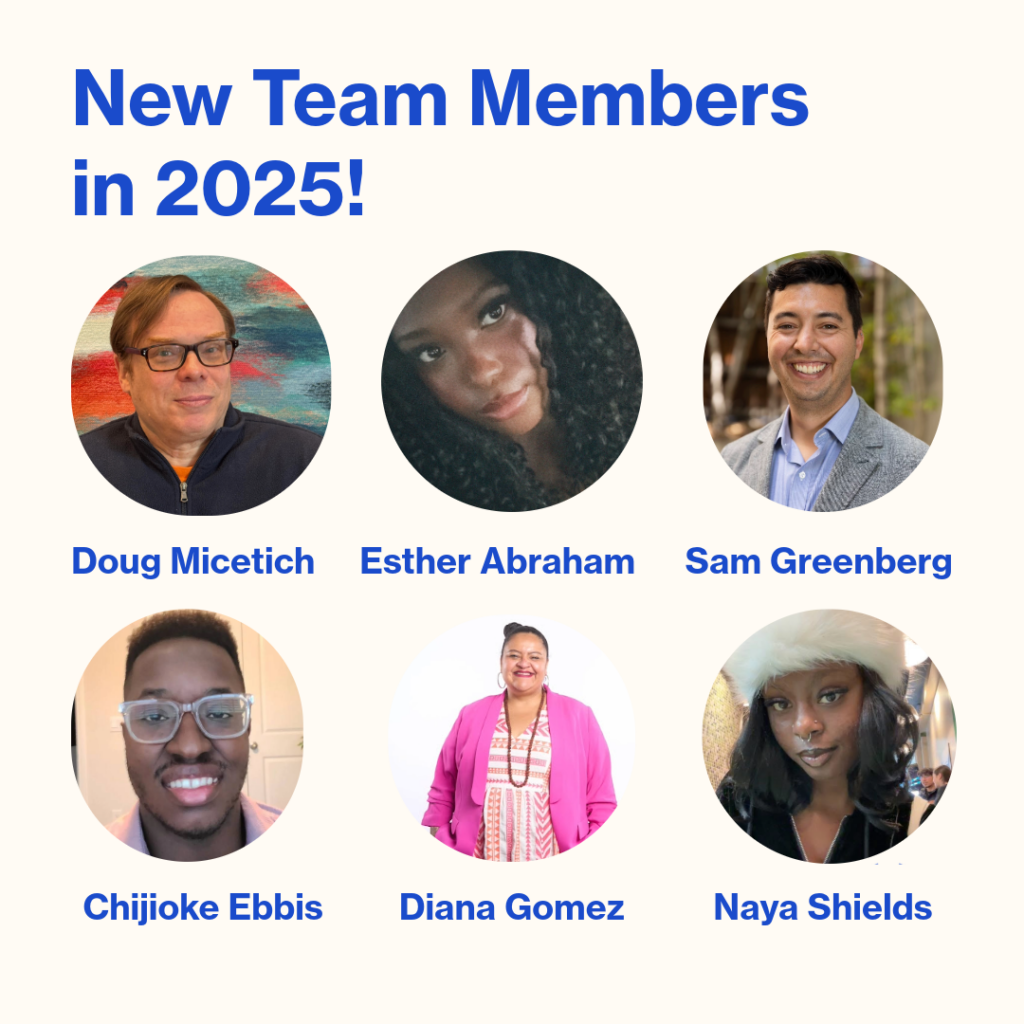
Image Description: Text on the image reads, “New Team Members in 2025!” Six circular headshots feature our newest team members: Doug Micetich, Esther Abraham, Sam Greenberg, Cihijioke Ebbis, Diana Gomez, and Naya Shields.
This year marked meaningful growth for our team, strengthening our ability to support residents directly and expand the reach of disability-forward housing. From new Resident Services staff working directly with residents in our communities to new Managing Directors leading from Atlanta, GA, to San Francisco, CA, these additions have played a vital role in advancing a shared vision of disability-forward housing and strong resident support nationwide.
Click here to read more about this year’s new team members and meet our full team.
Making Progress On The Kelsey Avondale
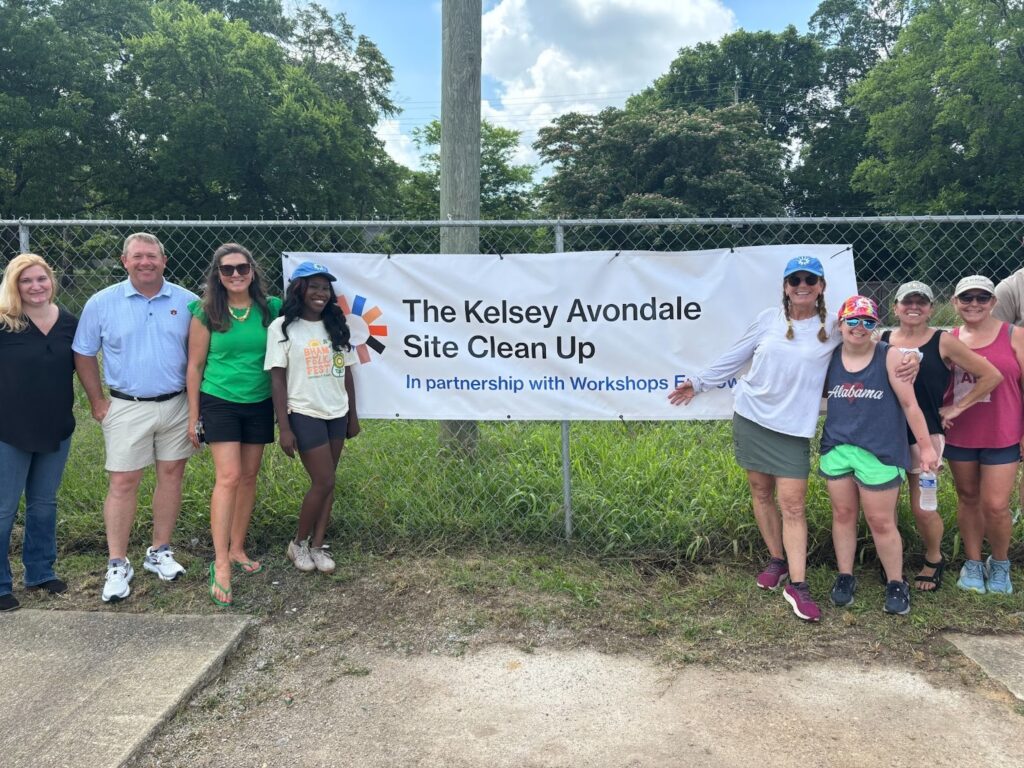
Image description: A group of people gather on both sides of a banner hanging on a fence. The banner reads, “The Kelsey Avondale Site Clean Up: In partnership with Workshops Empowerment.” The Kelsey’s logo is on the left side of the banner.
We made significant progress toward bringing The Kelsey Avondale to life. Our team spent time on the ground in Birmingham building relationships with community partners, funders, and local leaders to advance project planning and strengthen local collaboration.
We’re proud to be co-developing The Kelsey Avondale with Gulf Coast Housing Partnership (GCHP), whose deep local expertise has been instrumental in navigating Birmingham’s development landscape and advancing the project through key financing, entitlement, and predevelopment milestones. This year, the community was awarded approximately $4 million in HUD Section 811 capital advance funding, supporting deeply affordable homes and enabling 25% of the units to be reserved for people with disabilities. We also secured $1 million in Affordable Housing Program (AHP) funding through the Federal Home Loan Bank of Atlanta—an important regional financing source that further strengthened the project’s capital stack and brought us closer to breaking ground.
In June, Birmingham neighbors and partners came together for The Kelsey Avondale Site Clean Up, rolling up their sleeves to care for the site and celebrate the future of disability-forward housing in the city.
Together, these efforts reflect the strong community commitment behind transforming a long-vacant site into a vibrant, disability-forward community. We look forward to continuing this work with our national and local partners in the year ahead.
Click here to learn more about The Kelsey Avondale.
Disability-Forward Housing Honored Across the Field
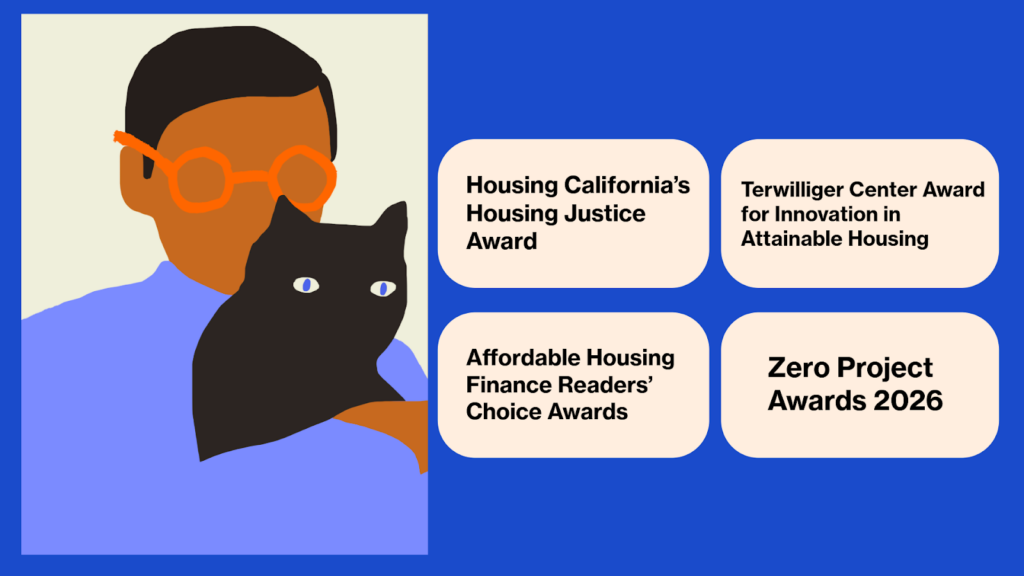
Image description: Illustrated graphic of a person with orange glasses holding a black cat on the left, set against a blue background. On the right are four rounded text boxes listing awards: “Housing California’s Housing Justice Award,” “Terwilliger Center Award for Innovation in Attainable Housing,” “Affordable Housing Finance Readers’ Choice Awards,” and “Zero Project Awards 2026.”
We’re excited about the ways disability-forward housing was celebrated across our field this year. Allie, our Managing Director, received Housing California’s Housing Justice Award for their leadership in advancing affordable, accessible, inclusive, and integrated housing; The Kelsey Civic Center was a finalist for the 2025 Affordable Housing Finance Readers’ Choice Awards; The Kelsey Ayer Station won Urban Land Institute’s Terwilliger Center Award for Innovation in Attainable Housing; and the Inclusive Design Standards were shortlisted for the Zero Project Awards 2026, selected from over 580 nominations worldwide –– fingers crossed!
We’re honored to be recognized alongside teams that continue to demonstrate that housing can be deeply affordable, innovative, and inclusive. Together, we’re proving that a more equitable housing future isn’t just possible—we’re building it in real time.
Mobilizing Advocates for Disability-Forward Housing
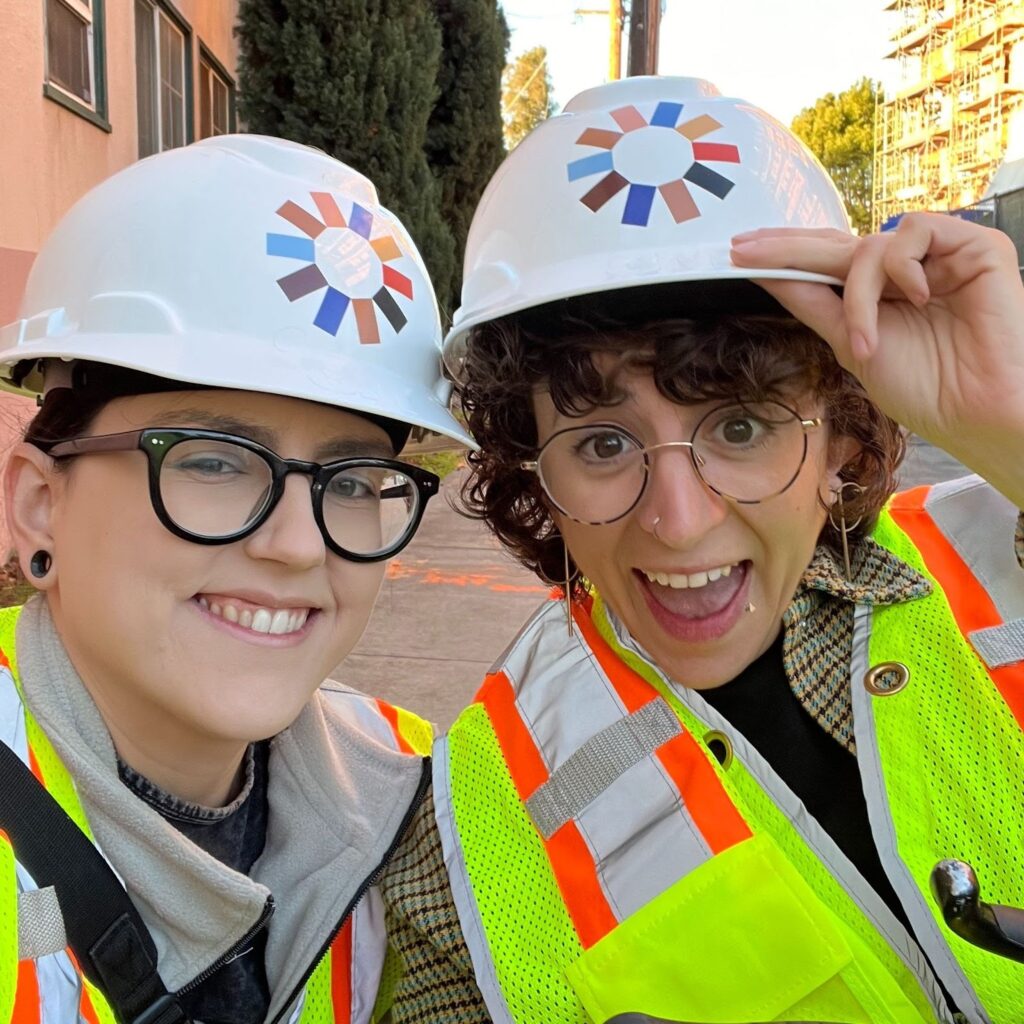
Image description: A picture of The Kelsey’s Policy team: Hunter and Allie. Hunter and Allie smile and take a selfie, wearing construction vests and hard hats with The Kelsey’s logo on them. Hunter is a light-skinned Native woman with long, black hair pulled back and wearing black glasses. Allie is a white queer person with short curly hair and thin-rimmed glasses.
We launched Breaking Ground Advocacy Alerts and led campaigns that mobilized over 1,200 advocates, partners, and supporters to defend and expand affordable, accessible, and inclusive housing for people with and without disabilities. Through regular updates, advocates received timely opportunities and tools to take action for disability-forward housing at the local and national level. From advocating for Medicaid Home and Community-Based Services to contacting representatives to protect federal housing assistance, we sent over 250 letters to defend federal housing and disability programs.
Click here to sign up for Breaking Ground Advocacy Alerts and join us in shaping a better housing future.
The Inclusive Design Standards: New Champions and Resources
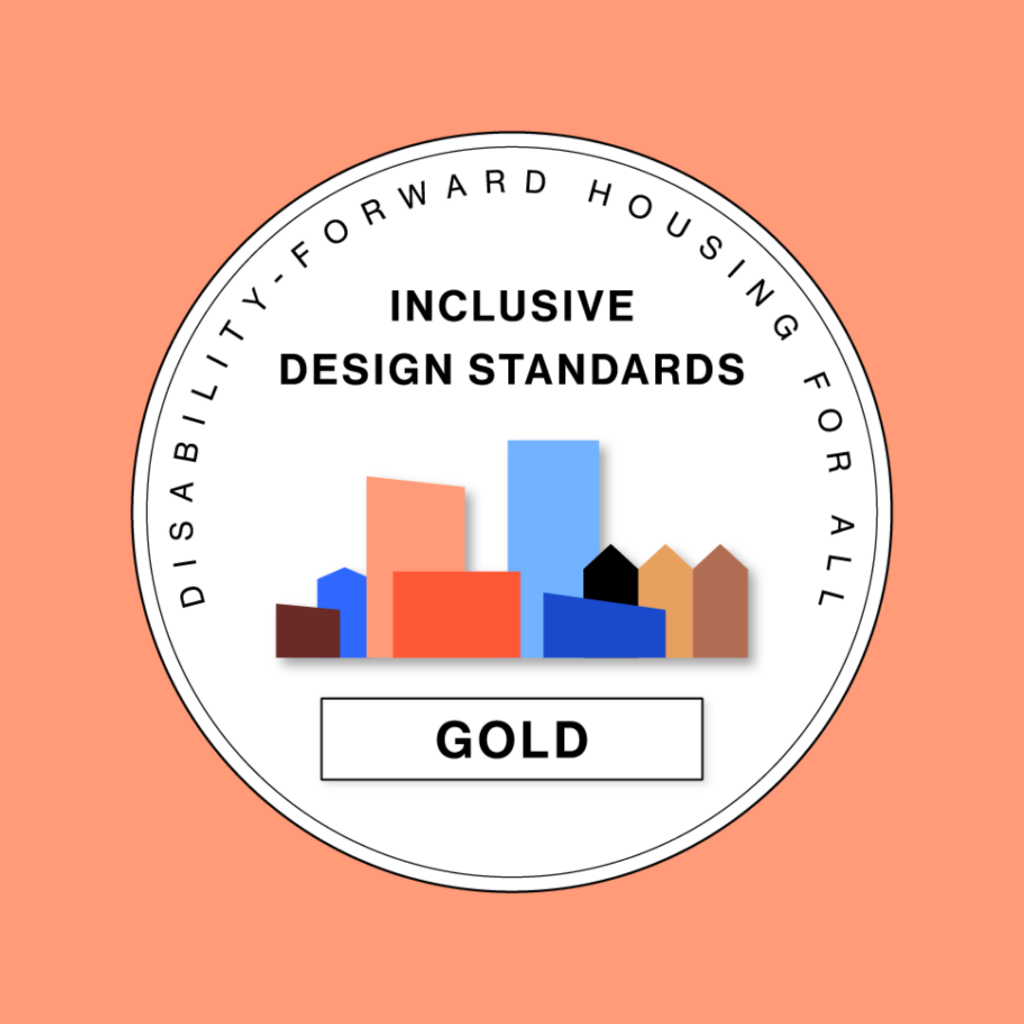
Image description: A circular emblem with the words “Disability-forward housing for all” around the outer ring. In the center, bold text reads “Inclusive design standards.” Below the text is a row of colorful geometric building shapes in shades of red, orange, blue, and brown, representing a community skyline. Beneath the buildings is a rectangular box with the word “Gold” in bold black letters, signifying the project’s certification level. The background is coral.
We continued to equip design teams with tools to create disability-forward spaces, with the Inclusive Design Standards embraced by partners across the country. We launched a new emblem for projects certified through the Inclusive Design Standards, and celebrated 8 Partridge Street / Midway Village Phase 2 for becoming the first certified community beyond our own. We also welcomed Practice, a Pasadena-based architecture firm with decades of experience designing educational, housing, and civic spaces, to our community of Committed Firms.
The Inclusive Design Standards also support municipalities in designing more inclusive neighborhoods: We published an article with the National League of Cities highlighting cities that have adopted them—including Washington, DC; San Antonio, TX; and San Jose, CA—and outlining how other municipalities can follow their lead.
Click here to explore the Inclusive Design Standards.
Convening and Resourcing Advocates Nationwide
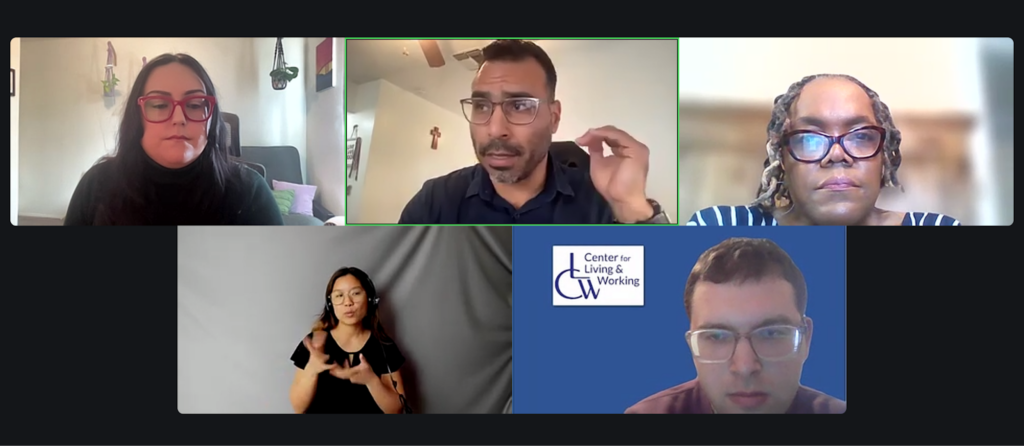
Image description: A screenshot of a Zoom webinar. Five people, of various genders and races, are spotlighted on the screen. One is talking while the others listen, and one is doing live ASL interpretation.
We convened and resourced more than 1,000 advocates nationwide through webinars designed to build collective power, protect, and expand the housing supports and services people with and without disabilities rely on. We launched An Advocate’s Guide to Advancing Disability-Forward Housing through Qualified Allocation Plans (QAPs) with a webinar led by housing, disability, and legal experts, equipping advocates with practical tools to push for more disability-forward housing at the local level. We also co-hosted Protect Housing for Disabled People: Understanding National Threats and Calls to Action with partners—the Autistic Self Advocacy Network, Bazelon Center for Mental Health Law, the National Council on Independent Living, and New Disabled South—to respond to federal threats facing critical programs like Housing Choice Vouchers (Section 8) and HUD Section 811. We closed the year with State and Local Strategies to Expand Inclusive Housing for People with Disabilities, exploring effective approaches for advocating to Public Housing Authorities (PHAs), advancing disability-forward zoning and land-use reform, and strengthening tenant protections and stability for disabled renters. Sign up for Breaking Ground Advocacy Alerts to stay up to date on actions you can take, and follow us on social media @TheKelseyMore for upcoming events.
Enabling Disability-Forward Homes through Technical Assistance
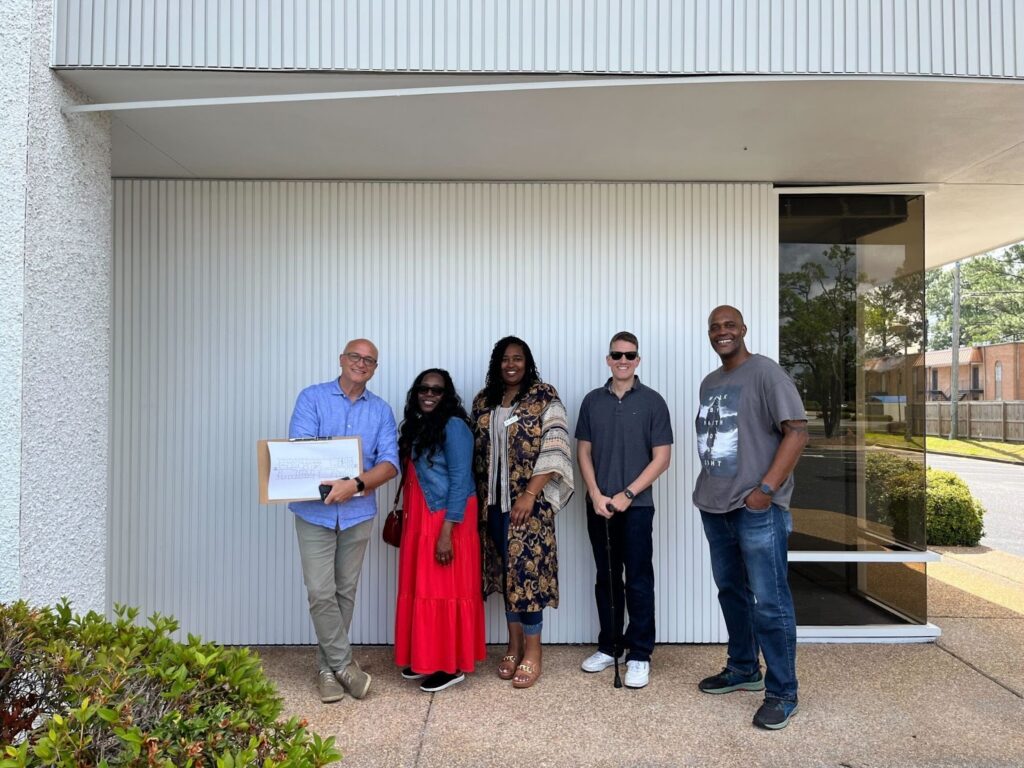
Image description: Five people of different races, genders, and with and without disabilities, stand and smile outside a white building. One person holds a large paper and a clipboard with building schematics on it.
Beyond our own communities, our team supported partners in addressing the need for disability-forward housing in their communities. Through our technical assistance work, we partnered with municipalities, advocates, and community organizations—providing capacity building, policy recommendations, and strategic support across design, development, and fundraising.
This year, we supported five technical assistance clients, including our largest partner to date, Tennessee’s Department of Disability and Aging (TDDA), as well as the City of Detroit Housing and Revitalization Department (HRD) and AIDS Alabama. We published findings and reports from our technical assistance projects in our Learn Center, making tools, insights, and lessons learned available so other communities can replicate our approach.
We also celebrated a milestone with former technical assistance client and longtime partner, We Are Up, as they moved one step closer to breaking ground on the community we had strategized. Together, these collaborations are enabling disability-forward homes to take shape in communities across the country.
Disability-Forward Housing Futures Summit
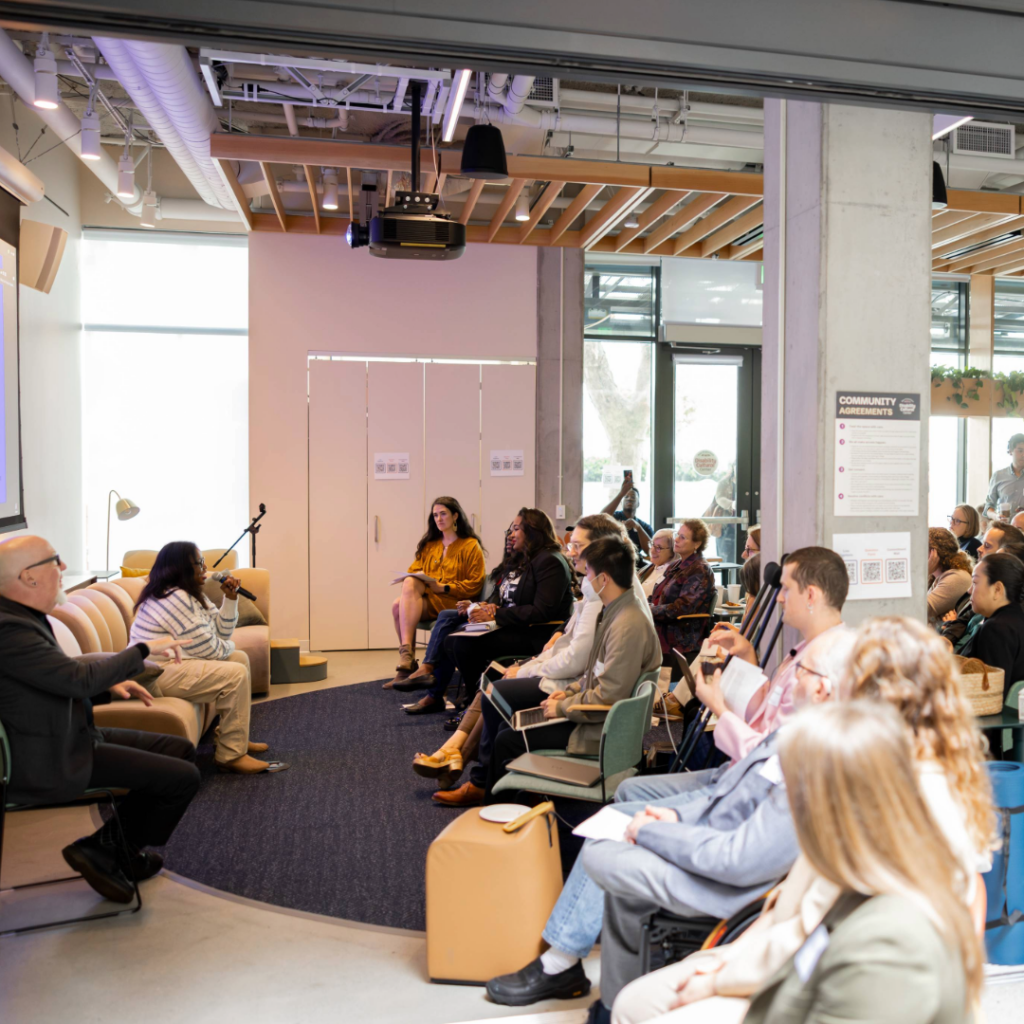
Image Description: A session during the Disability-Forward Housing Futures Summit. A diverse group of adults sits in a semicircle inside a modern, well-lit community space. Keah Brown, a Black person with long straight hair, wearing a white and gray striped sweater and khaki pants, sits at the front of the room and speaks into a microphone. A sign language interpreter also sits at the front of the room. Attendees listen attentively, some taking notes, with a projector mounted overhead and large windows and exposed wood beams visible in the background.
We hosted the first-ever Disability-Forward Housing Futures Summit at the Disability Cultural Center in The Kelsey Civic Center. Convened to spotlight the urgent need for disability-forward housing — and the transformative potential of inclusive, interdependent communities — the Summit brought together more than 140 attendees from around the world. Organized around the three core pillars of our work — accessibility, affordability, and inclusivity — the day was both a powerful reminder of how much work remains and a compelling vision of the future we can create when we center the experiences and needs of people with disabilities.
Click here to read our full recap of the Summit.
Donate to support more inclusive communities.