Section 811 Supportive Housing for Persons with Disabilities is a federal program run by the U.S. Department of Housing and Urban Development (HUD). It helps create affordable, accessible, and community-based housing for people with disabilities with extremely low incomes.
Housing remains out of reach for many people with disabilities. More than 18 million adults with disabilities qualify for federal housing assistance but do not receive it, and millions of people who rely on Supplemental Security Income (SSI) cannot afford housing anywhere in the country. Without enough affordable and accessible homes, many people are pushed into homelessness, institutional settings, or unstable housing situations.
Section 811 is one of the federal government’s primary tools for addressing this crisis. In fact, it is the only federal housing program dedicated specifically to creating deeply affordable, accessible, and integrated housing for adults with disabilities.
At The Kelsey, we see Section 811 as more than a funding stream. It is a critical tool for expanding inclusive housing and helping people live independently in the communities of their choosing. This article explains how the program works, why it matters, how we use it in our communities, and the changes needed to strengthen it moving forward.
How Section 811 Works
Section 811 funding is delivered through two main programs:
1. Capital Advance/Project Rental Assistance Contract (PRAC)
The Capital Advance/PRAC program provides funding directly to nonprofit housing developers to help cover the costs of building, acquiring, or rehabilitating housing for adults with disabilities.
These developments may include rental housing, such as independent living projects, condominium units, and small group homes, with supportive services available. Supportive services are voluntary, individualized services that help people with disabilities maintain stable housing and live independently in the community. These services can include case management, benefits navigation, employment supports, personal care assistance, healthcare coordination, transportation assistance, and connections to community resources.
The funding does not need to be repaid as long as the housing remains available to very-low-income people with disabilities for at least 40 years, making it one of the federal government’s most significant investments in permanent supportive housing.
2. Project Rental Assistance (PRA)
Project Rental Assistance (PRA) provides ongoing rental subsidies that make housing affordable for residents with disabilities.
Rather than funding construction, PRA is layered onto existing or newly developed housing alongside other funding sources such as the Low-Income Housing Tax Credit (LIHTC) and/or HUD’s HOME program. These funds are administered by state housing agencies in partnership with state health, human services, and/or Medicaid programs.
PRA works by bridging the gap between what a resident can afford and what the housing development needs to remain financially sustainable. Residents generally pay approximately 30% of their income toward rent, while Section 811 PRA covers the remaining amount. For example, a development may be financed if a unit generates rent affordable to a household earning 60% or 80% of the Area Median Income (AMI). Section 811 PRA allows that same unit to be occupied by a resident with a much lower income—often around 20% to 30% of AMI—by paying the difference between the resident’s contribution and the rent needed to support the property’s operations. This structure helps create deeply affordable homes within mixed-income communities without requiring developers to absorb the lost rental revenue.
Housing supported by 811 PRA must be integrated, with no more than 25% of units set aside for extremely low-income adults with disabilities who use supportive services. Extremely low-income households are those earning at or below 30% of the Area Median Income (AMI) for their region, as defined by HUD. Many people who qualify for Section 811 rely on fixed incomes from programs such as Supplemental Security Income (SSI), which often leaves them unable to afford market-rate housing.
Section 811 PRA also relies on partnerships between housing providers, state agencies, and supportive service organizations. Residents are often connected to housing through referral systems coordinated with Medicaid and health and human services agencies. These partnerships help residents live independently in the community.
Additionally, the program ensures residents are part of a broader, inclusive community and allows them to focus on their health in a non-medical setting.
How The Kelsey Uses Section 811
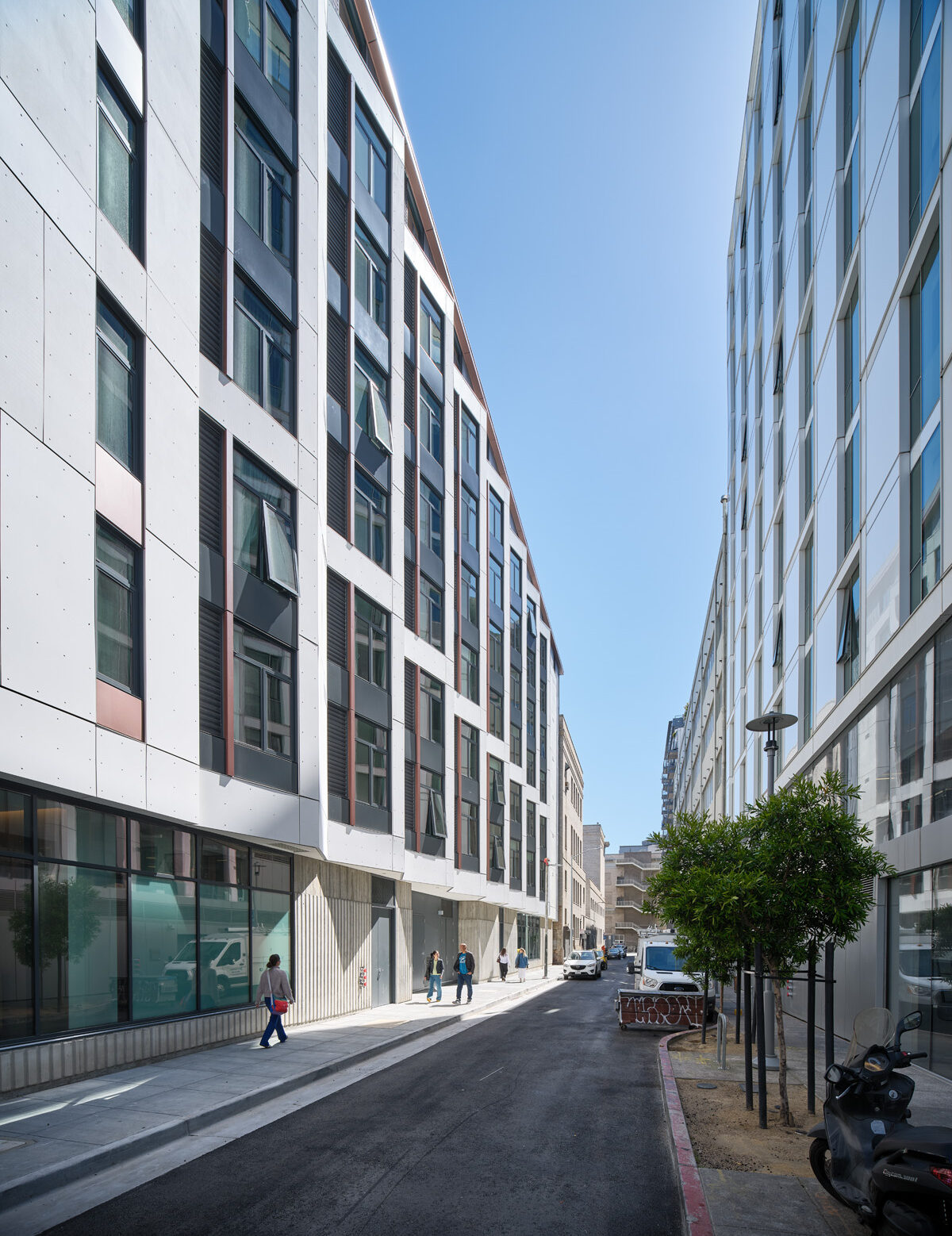
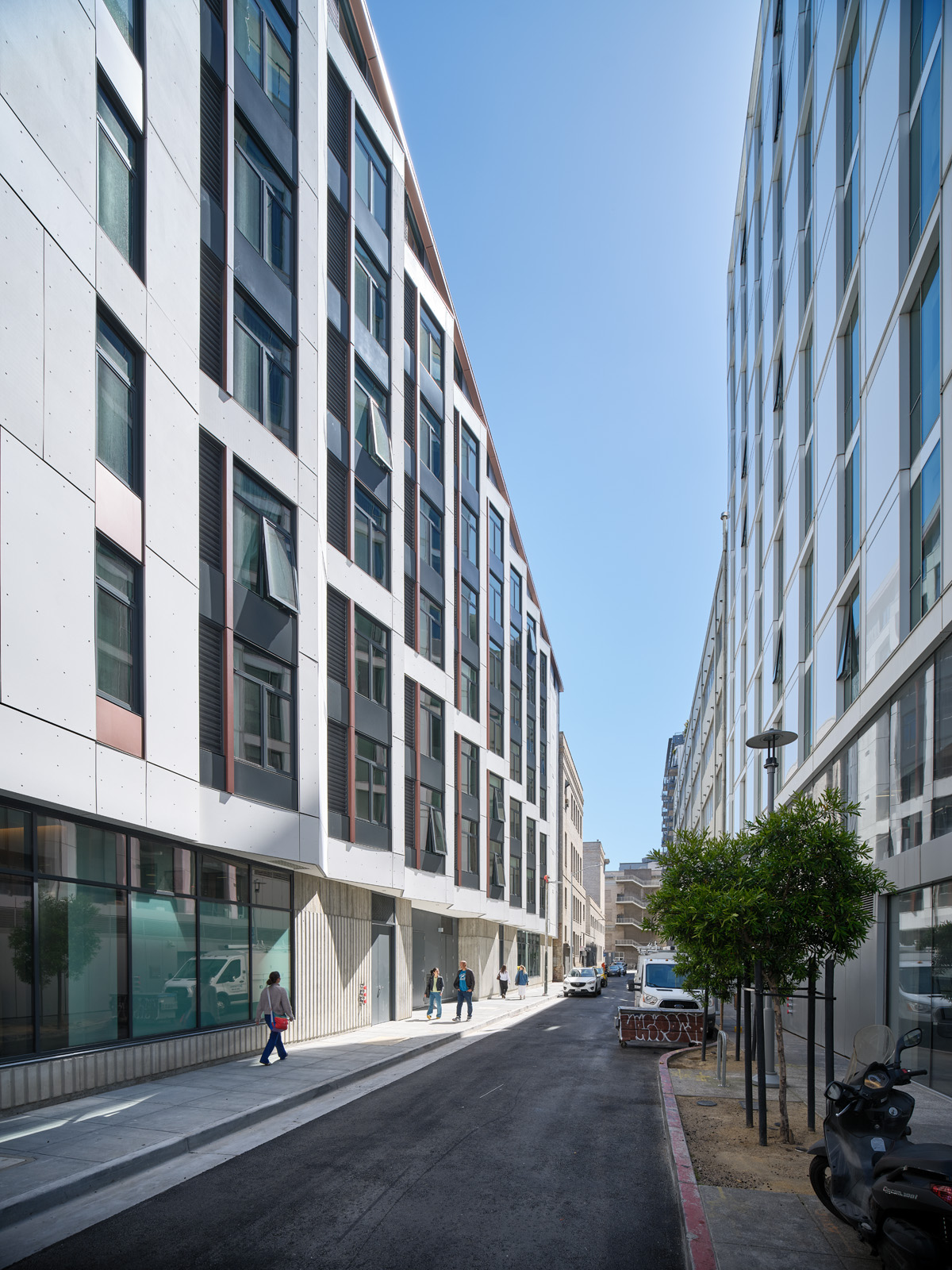
At The Kelsey, Section 811 has been essential to making deeply affordable, inclusive housing possible. Across projects like The Kelsey Civic Center, The Kelsey Ayer Station, and The Kelsey Avondale, Section 811 Project Rental Assistance (PRA) and Capital Advance funding have helped us serve residents with extremely low incomes while maintaining high standards for accessibility and supportive housing.
The Kelsey Ayer Station and The Kelsey Civic Center receive Section 811 PRA. Together, these communities include 36 homes supported by Section 811 PRA—22 at The Kelsey Ayer Station and 14 at The Kelsey Civic Center.
At The Kelsey Avondale in Alabama, Capital Advance funding will help support the development of 19 deeply affordable homes for residents with disabilities within a larger mixed-income integrated community.
While Section 811 helps make homes affordable and accessible for eligible residents, The Kelsey adds additional design, resident services, and community-building strategies that go beyond minimum accessibility requirements. We do this through our use of Inclusive Design Standards. This allows the project to support residents’ independence while creating a more inclusive housing community for people with and without disabilities.
Section 811 also helps provide residents with stability beyond very affordable rent. The program supports The Kelsey’s Inclusion Concierge (I.C.) team, which collaborates with residents, Property Management, and external service providers to help residents maintain housing and independence. This can include facilitating Housing Support Plan meetings, supporting residents during property management processes such as recertifications, connecting residents to supportive services, and coordinating in-home care and support.
Because many residents enter Section 811 housing through coordinated referral systems, residents often arrive already connected to case managers, supportive services, or community-based care providers. This built-in coordination helps strengthen communication between residents, property management teams, case managers, and service providers, making it easier to address challenges before they impact housing stability. This approach can help residents access services more quickly, navigate housing-related processes, maintain independence, and stay connected to a broader support network.
The Kelsey’s Section 811 Policy and Advocacy Priorities
Across the country, millions of people with disabilities qualify for housing assistance but do not receive it. At the same time, rents continue to rise, and many people who rely on fixed incomes, like Supplemental Security Income (SSI), cannot afford housing anywhere in the U.S. Without enough affordable and accessible options, people are pushed into homelessness, institutional settings, or unsafe and unstable housing.
At The Kelsey, our advocacy focuses on strengthening and expanding Section 811 to meet the scale of this need.
Increase funding and reach more communities
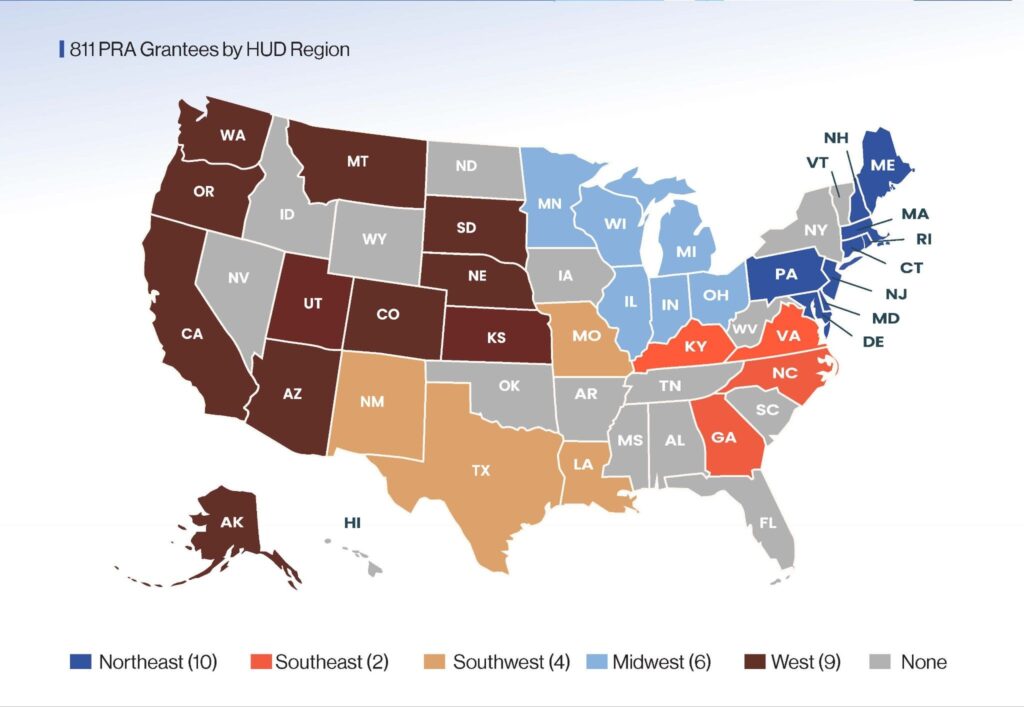
Section 811 is not available in every state, and current funding limits the number of people it can serve. Expanding the program requires significant new investment. We call for at least $424 million in new funding for Section 811 Project Rental Assistance (PRA), full funding for renewals and all existing contracts, and assurance that every state receives a minimum level of funding. This would allow more communities to participate and help more people access affordable, accessible, and integrated housing.
Remove barriers to implementation
Even when funding is available, Section 811 can be hard to use. Unclear requirements, like environmental review (NEPA), and short timelines can delay or limit projects. Program rules—such as limiting eligibility to state agencies and setting low funding caps—can also restrict access and reduce impact. Clearer guidance, better-aligned timelines, stronger technical assistance, and more flexible program design would make it easier for developers to use Section 811 effectively.
Strengthen Section 811 Capital Advance
Section 811 Capital Advance should do more to support integrated, disability-forward housing. While the program is a critical source of funding for affordable housing for people with disabilities, current program structures do not always make it easy for nonprofit developers to use Capital Advance within larger integrated multifamily developments.
Capital Advance should better incentivize integrated housing for people with and without disabilities, support newer inclusive housing developers, and provide more flexible timelines and funding structures. The program should continue prioritizing universal and inclusive design that goes beyond minimum accessibility requirements.
The program should also better support residents who live with family members, live-in aides, or caregivers. Current funding structures can limit the ability to create units with more than one bedroom, which may not reflect the real support needs of residents with disabilities. Greater flexibility would help Section 811 better support independent living, housing stability, and community integration.
Conclusion
Section 811 shows what is possible when housing policy prioritizes accessibility, affordability, and community integration. But meeting the scale of today’s housing crisis will require greater investment, stronger implementation, and a broader commitment to inclusive housing systems.
At The Kelsey, we believe everyone deserves the opportunity to live in a home and community where they can thrive. Strengthening Section 811 is essential to making that vision a reality.