“Without a change of course, we will effectively build a generation of affordable housing that remains physically off-limits to millions of seniors and people with disabilities.”
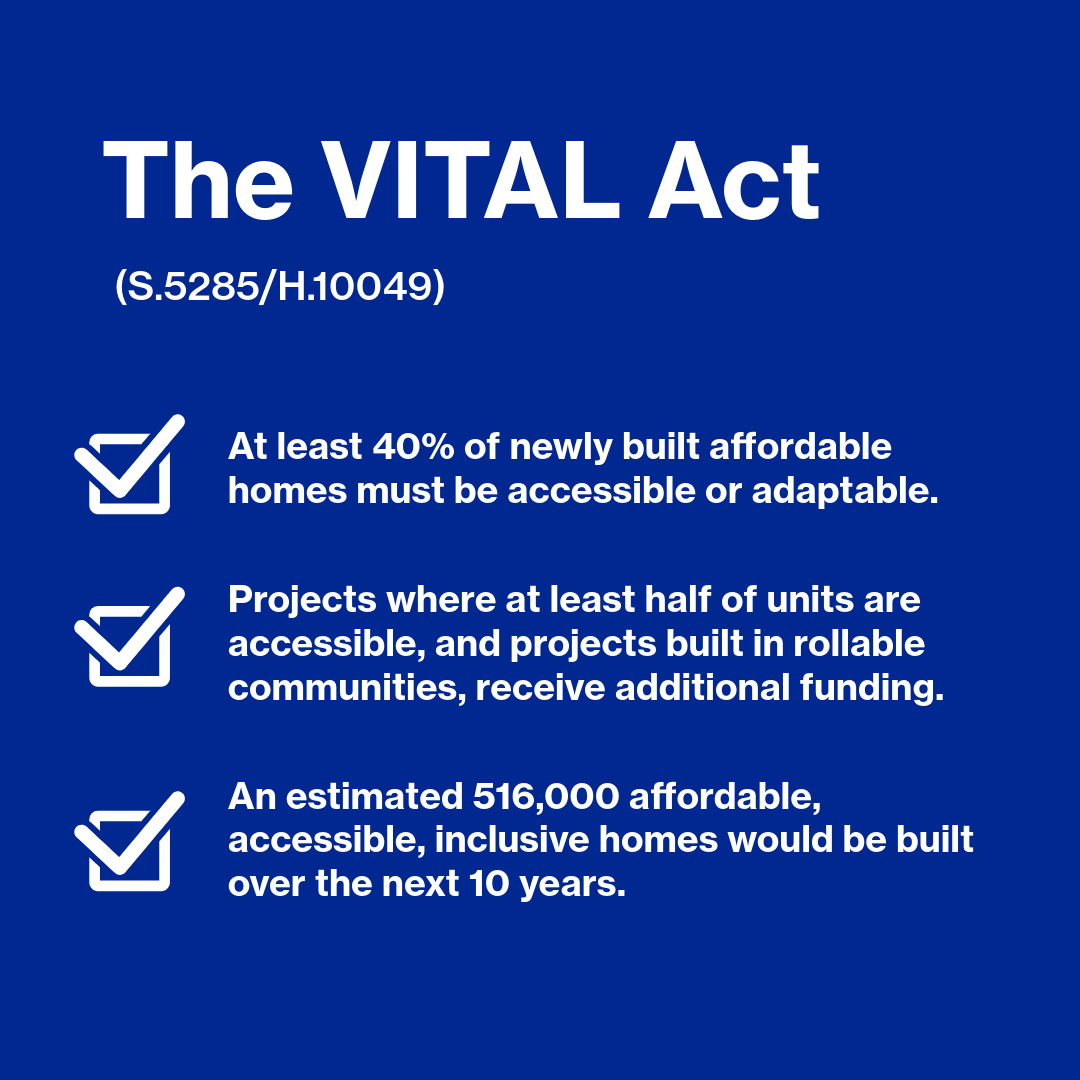
We co-authored a new op-ed with the National Low Income Housing Coalition (NLIHC) in support of the VITAL Act (Visitable Inclusive Tax Credits for Accessible Living Act).
This summer, Congress voted on the biggest housing package in decades. Accessibility, however, was mentioned only minimally.
In the United States, less than 6% of housing is accessible. Yet, roughly 10.2 million adult renters need accessibility features or live with someone who does.
It is more critical than ever to invest in affordable and fully accessible housing. Lawmakers from both parties reintroduced the VITAL Act last month to help make this happen.
The VITAL Act would strengthen the Low-Income Housing Tax Credit (LIHTC)—the nation’s main tool for funding affordable housing—to ensure that more affordable homes are built to be accessible or adaptable, and walkable/rollable.
As we note in our op-ed, “Affordable housing leaders and housing supply advocates have a choice. We can continue to build housing that excludes one-quarter of the population, or we can embed the language of the VITAL Act into any future LIHTC legislation.”